
English ![]()

T: +86-15903202172
E: sales@xs-foundry.com
E: sales@xs-foundry.com
Linzhang Jian'an West Road 569, Handan City, Hebei Province
Views: 0 Author: Site Editor Publish Time: 2026-03-05 Origin: Site
Urban infrastructure depends on reliable access points that allow engineers to inspect, repair, and maintain underground networks. When a project specification mentions manhole covers, it does not refer to a single universal product. Roads, sidewalks, utility chambers, and industrial facilities all require different designs depending on load conditions, environment, and service purpose. Understanding the various types available helps engineers, contractors, and project planners choose a solution that ensures safety, durability, and long-term performance. As a manufacturer with decades of casting experience, Handan Xiangsheng Cast Co., Ltd. provides multiple types of covers designed for demanding municipal and industrial applications.
Before comparing products, it is helpful to clarify what engineers mean when they talk about “types.” The term does not simply refer to shape or appearance. In infrastructure projects, the classification of a manhole cover may involve several aspects including the material used, the shape of the cover, the load class it can withstand, and the specific application it serves.
A single access point might use a round ductile iron cover with a locking mechanism designed for heavy traffic. Another installation might use a square cover made from composite material placed in a pedestrian plaza. Both products serve the same purpose but belong to different categories depending on how they are designed and where they are installed.
Many procurement specifications mention a particular design style without specifying the load rating. However, load capacity is often the most important factor in determining whether a cover will perform safely under vehicle traffic. A cover installed on a busy road must handle significantly higher pressure than one installed in a landscaped walkway.
For engineers and contractors, the first step is understanding the environment in which the cover will operate. Traffic load, climate exposure, corrosion risk, and maintenance access all influence the appropriate type of cover. Once these conditions are clear, choosing between different designs becomes much easier.
Material selection is one of the most fundamental ways to classify manhole covers. Different materials offer varying levels of strength, corrosion resistance, weight, and cost.
Ductile iron has become one of the most widely used materials for modern infrastructure. Its mechanical strength and flexibility allow it to handle heavy traffic loads without cracking. Compared with traditional cast iron, ductile iron provides improved impact resistance and longer service life.
Municipal roads, highways, and industrial yards frequently rely on ductile iron covers because they can withstand repeated vehicle pressure and harsh weather conditions. Handan Xiangsheng Cast Co., Ltd. manufactures ductile iron covers using advanced casting and machining processes, ensuring consistent quality and structural reliability.
Gray cast iron has been used for decades in municipal infrastructure. While it is generally more brittle than ductile iron, it remains suitable for certain applications where loads are relatively moderate and cost efficiency is important.
Sidewalk access points, smaller inspection chambers, and low-traffic areas may still use gray cast iron covers. These covers remain popular in some regions because they provide stable performance at a lower manufacturing cost.
Composite materials have gained popularity in situations where metal theft is a concern. Because these covers do not contain valuable scrap metal, they are less attractive to thieves.
Composite covers are also lighter than traditional iron covers, which can simplify installation and maintenance. However, they are typically used in pedestrian zones or light-duty areas rather than major traffic roads.
Certain infrastructure projects require covers that combine multiple materials. Concrete-filled designs may provide additional weight and stability, while hybrid constructions can enhance durability or reduce noise during vehicle passage.
These specialized solutions demonstrate that material choice often depends on local conditions and engineering requirements.
Another common way to classify manhole covers is by shape. Although the round design is the most familiar, several shapes are used in different infrastructure environments.
Round covers are widely recognized because they offer several practical advantages. The circular design distributes pressure evenly and prevents the cover from falling through its opening.
Maintenance crews also appreciate that round covers can be rolled during handling, making them easier to reposition despite their weight. For these reasons, round designs dominate roadways and other traffic-heavy areas.
Square covers are often chosen when access space is particularly important. The shape allows a larger opening for workers and equipment, which can simplify maintenance tasks inside the chamber.
These covers are commonly used in sidewalks, landscaped areas, or utility chambers where the layout follows straight construction lines.
Some underground systems require elongated openings. Utility trenches carrying cables, pipelines, or electrical infrastructure may use rectangular covers to match the shape of the chamber.
Rectangular designs are less common than round or square covers but remain useful for specialized installations.
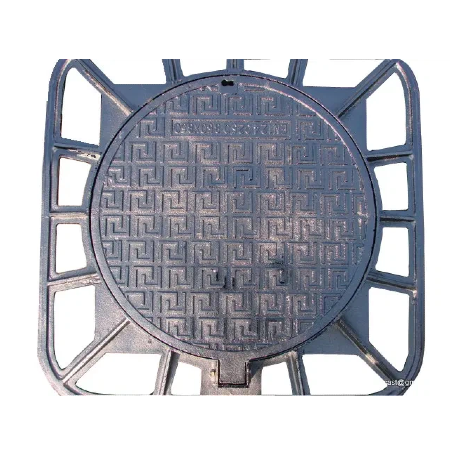
Load classification determines how much pressure a cover can safely withstand. Standards around the world define several load categories depending on traffic conditions.
Covers designed for pedestrian areas do not need to support heavy vehicles. These installations typically appear in parks, gardens, and walking paths.
Because the load requirement is lower, these covers can often use lighter materials or thinner structures.
Parking areas, residential driveways, and service lanes require covers that can withstand occasional vehicle loads. Medium-duty products are designed for these conditions.
They provide stronger structural support than pedestrian covers while remaining cost-effective for projects where heavy truck traffic is unlikely.
Road networks and industrial facilities demand the strongest designs. Heavy-duty covers must handle repeated pressure from trucks, buses, and construction equipment.
Ductile iron covers are commonly used in these environments because they offer the necessary strength and fatigue resistance.
Even if two covers look similar, their load ratings may be very different. Selecting a product with insufficient strength can lead to deformation, noise, or safety hazards. Matching the cover to the correct load class is therefore essential for long-term infrastructure reliability.
In addition to material and shape, manhole covers are also categorized by the type of utility system they protect.
Sewer networks require frequent inspection and cleaning. Covers used in these systems must provide secure sealing while allowing easy removal during maintenance.
Drainage covers are designed to withstand moisture, corrosion, and environmental exposure.
Communication networks rely on underground cable chambers. These access points allow technicians to install or repair fiber cables and electrical connections.
Telecom covers often include identification markings that indicate the type of network located below.
Water infrastructure includes valves and control points that must remain accessible for maintenance. Covers used in these locations must protect equipment while preventing contamination.
Factories and industrial facilities may require specialized access covers for process pipelines, electrical systems, or inspection chambers.
These installations often demand custom sizes or enhanced strength depending on operational conditions.
Even within the same category, manhole covers can include additional design features that improve functionality and safety.
Locking mechanisms prevent unauthorized access and reduce the risk of theft. These designs are particularly valuable in public areas where security is important.
Some covers are completely removable, while others are attached to a hinge. Hinged designs allow maintenance crews to open the cover quickly without lifting it away from the frame.
Rubber or polymer gaskets can be added to reduce noise caused by traffic vibrations. This feature is especially useful in urban areas where vehicles frequently pass over covers.
Municipal authorities often require covers to display city logos or utility markings. Modern casting techniques allow manufacturers to customize surface patterns and identification labels.
Choosing the right design requires evaluating several practical factors.
Load capacity should always be the first consideration. Selecting a cover that meets the required strength standards ensures safety and durability.
Environmental conditions such as humidity, salt exposure, or extreme temperatures can affect the longevity of infrastructure components.
Not all access chambers follow standard dimensions. Custom manufacturing allows engineers to match the cover precisely to the installation site.
Handan Xiangsheng Cast Co., Ltd. has specialized in cast infrastructure products since 1999. The company operates a large foundry with advanced casting workshops, machining facilities, and quality testing equipment. With an annual production capacity of 30,000 tons, the company supplies durable covers for municipal construction, road engineering, and industrial infrastructure projects.
Type | Typical Material | Common Shape | Best Application | Key Advantage |
Heavy-duty road cover | Ductile iron | Round | Highways and city roads | Excellent load strength |
Pedestrian access cover | Cast iron or composite | Square | Sidewalks and parks | Cost-effective and lightweight |
Telecom chamber cover | Ductile iron | Square or rectangular | Cable networks | Clear identification markings |
Drainage system cover | Ductile iron | Round | Stormwater and sewer networks | Corrosion resistance |
Industrial access cover | Ductile iron or hybrid | Round or rectangular | Factories and plants | Custom strength and sizing |
Understanding the different categories of manhole covers helps project planners select the right product for each infrastructure environment. Material selection, shape design, load capacity, and application all influence how a cover performs over time. By focusing on functional requirements rather than appearance alone, engineers can ensure safety and long-term reliability for underground systems. Handan Xiangsheng Cast Co., Ltd. manufactures durable cast solutions designed for demanding municipal and industrial conditions. If your project requires dependable access systems or customized utility access covers, contact our team to discuss your specifications and discover reliable casting solutions.
Contact Us
Handan Xiangsheng Cast Co., Ltd. welcomes inquiries from contractors, distributors, and project planners worldwide. Our engineering team is ready to assist with technical details, product recommendations, and custom casting solutions for infrastructure projects.
Ductile iron is widely used because it provides excellent strength, durability, and resistance to heavy traffic loads.
Round covers distribute pressure evenly and cannot fall through the opening, making them safer for roadway installations.
The load class is chosen based on expected traffic conditions, such as pedestrian areas, parking zones, or highways with heavy vehicles.
Yes. Manufacturers can produce custom sizes, surface markings, and locking features to meet the requirements of different infrastructure systems.


